Every pre litigation investigation begins the same way: online defamation cases can create pressure to act quickly. The client wants the content removed. The attorney may be considering an injunction, subpoena, demand letter or complaint. Everyone wants to know who is responsible and how the conduct can be stopped. But before filing, there is another question worth asking: What can we learn before the defendant knows an investigation is underway? At Rexxfield, we frequently work with attorneys during this pre-litigation stage. In our experience, it can be one of the most valuable windows in an online defamation investigation. Once a suspected perpetrator becomes aware of impending legal action, the digital landscape can change quickly. Accounts disappear. Posts are deleted. Websites are modified. Usernames change. Privacy settings tighten. Connections between accounts may be removed. A focused pre litigation investigation can help counsel understand the people, evidence and infrastructure involved before that happens — which is why a disciplined pre litigation investigation process matters so much in these cases.
Start With the Evidence the Client Already Has
Clients often arrive with a folder full of screenshots. That is a useful starting point, but we generally want to understand the original digital environment surrounding those screenshots. Where was the content published? When did it first appear? Does the account have a longer history? Has the username changed? Which other accounts interacted with it? Was the same allegation published somewhere else? Does the content appear coordinated? The objective is to turn a collection of individual incidents into a chronology and an investigative map. This can reveal that what initially appeared to be one defamatory account is actually part of a much broader campaign.Determine Whether the Defendant Is Actually Anonymous
Sometimes the identity problem is easier than it first appears. An account may use a pseudonym but leave behind enough publicly available information to establish a likely identity.
Other cases require substantially more work, using the same corroboration principle we apply when finding the real identity behind fake social media accounts. We may examine historical usernames, related accounts, domains, websites, public records, reused images, online communities and relationships between digital identities.
IP address attribution can also become an important part of the investigation. Where an IP address associated with the anonymous activity can be lawfully identified, we may be able to develop additional evidence connecting that IP address to a suspected individual. If a suspect is already known, lawful investigative and social engineering techniques can sometimes help us rule that person in or rule them out. Where the connection can be independently established, this may avoid the need to subpoena an internet service provider simply to identify the subscriber, potentially saving counsel crucial time.
A key principle is corroboration. We do not want to tell an attorney that Account X probably belongs to Person Y because one username resembles another, or because of a single technical indicator. The objective is to determine whether multiple independent indicators, including IP evidence where available, support the same conclusion.
Look Beyond the Individual Post
Defamation investigations can become overly focused on the specific statement identified by the client. From an investigative perspective, the surrounding ecosystem may be much more revealing. A person running an anonymous account may also control a website. They may post on forums under another identity. They may operate several social media profiles. They may communicate with other participants in the campaign. Understanding that ecosystem can help counsel determine whether they are dealing with an isolated publication or organised conduct. This becomes especially important when AI is involved, a pattern we have tracked directly in our coverage of AI-powered harassment campaigns. Generative AI can allow one person to create what looks like activity from dozens of independent users. Fake reviews, fabricated comments, synthetic profiles and AI generated articles can create an illusion of consensus.Investigate the Suspected Defendant Carefully
If the client already suspects someone, that information should be treated as a hypothesis rather than a conclusion — not a basis on its own for naming a John Doe defendant. There may be legitimate reasons to examine a former employee, competitor, business partner or litigant. But an investigation should look for evidence both supporting and contradicting that theory. This is particularly important when counsel may eventually rely on the findings. Attribution based on coincidence can create serious strategic problems. Good investigative work should reduce uncertainty rather than reinforce assumptions.Understand What Information May Require Legal Process
Not every question can be answered through open source investigation — anonymity online has real, well-documented limits, as the Electronic Frontier Foundation’s work on anonymity makes clear. Platforms and service providers may hold subscriber information, IP records, access logs or other data that is unavailable publicly. Identifying those information gaps before litigation can itself be useful, and this is where our subpoena preparation work typically begins. Investigators may establish that several relevant accounts exist on a particular platform, identify important dates and determine which accounts or infrastructure appear connected. Counsel can then assess whether legal process should be directed toward those specific records under the Federal Rules of Civil Procedure governing discovery. The distinction between investigation and discovery is important. Investigation can tell you what is visible, what can be inferred and where additional evidence may exist. Legal process may then provide access to information that investigators cannot lawfully obtain independently.Consider the Defendant’s Wider Digital Footprint
Identification is not always the end of the investigation. Before commencing litigation, counsel may also need to understand who they are dealing with. Does the person have a history of similar conduct? Are other individuals involved? Are there additional websites or accounts? Does the defendant appear to operate from the jurisdiction assumed by the client? Have they targeted other people using similar methods? These findings can materially change litigation strategy. They may reveal additional witnesses, victims, evidence sources or causes of action that were not apparent from the client’s initial complaint.Pre Litigation Investigation Can Also Tell You When Not to File
This is an underappreciated benefit. An investigation does not always produce the answer a client hopes for. Sometimes the evidence supporting attribution is weak. Sometimes the suspected individual appears unlikely to be responsible. Sometimes several possible actors remain. Knowing that before filing can prevent counsel from building a case around an assumption that may later collapse. At Rexxfield, we view that as a successful investigative outcome too. The purpose of an investigation is not to validate a predetermined theory. It is to establish what the available evidence actually supports.Preserve Before You Confront
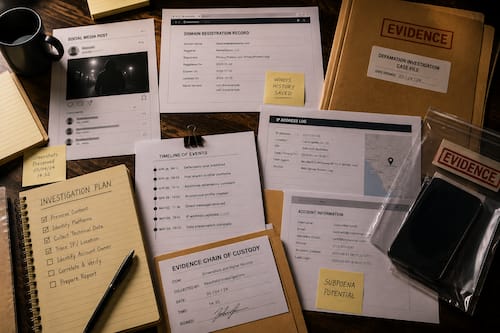
One of the most important considerations before sending a demand letter is evidence preservation. Once a perpetrator knows that counsel is involved, there is a real possibility that evidence will be removed. Deleting content does not necessarily make it unrecoverable, but relying on that possibility creates unnecessary risk. Relevant material should therefore be preserved before confrontation wherever appropriate. That can include the offending posts, URLs, account identifiers, profile information, surrounding comments, timestamps, websites, relevant images and other contextual material. The exact preservation process depends on the anticipated litigation and jurisdiction, so attorneys should make the legal determination about what is required. From an investigative perspective, however, more context generally creates more opportunities for attribution.Building a Better Starting Position
Online defamation litigation often begins with uncertainty. Who published the content? Are multiple accounts connected? What evidence still exists? Which platforms hold relevant information? Is the client’s suspected defendant actually responsible? A targeted pre litigation investigation can answer many of those questions before the first pleading is filed. For attorneys, that means approaching litigation with a clearer understanding of the evidence, the likely defendant and the discovery that may be required. And in online cases, where evidence can disappear with a few clicks, getting that understanding early can make a substantial difference.How Rexxfield Can Help
This article is the second in a three-part series for attorneys handling online defamation and anonymous harassment matters. Read the first article, Online Defamation Investigations for Attorneys, and the third, How to Identify an Anonymous Online Harasser Before Filing a Lawsuit. If you are representing a client dealing with anonymous defamation, harassment or coordinated online abuse, Rexxfield can assist with evidence preservation, attribution investigation and litigation support. Engaging early can help counsel understand what evidence exists, what can be established independently, and where legal process may be required. Request a free consultationTalk to an investigator
Being targeted online?
Our investigators identify anonymous accounts and document the evidence, so you or your attorney can act.
Request a free consultationOnline defamation investigations