Deepfake investigation work increasingly involves cloned voices and synthetic video appearing as disputed evidence in employment, family and fraud matters. Rexxfield combines provenance analysis, chain-of-custody review and independent corroboration, because a detector score alone is never enough to prove what a file really is.
A disputed recording rarely announces itself as synthetic. It usually arrives as ordinary evidence — a voicemail, a video call recording, a clip forwarded by a colleague — and only becomes contested once the story it tells conflicts with what someone already knows to be true.
Understanding deepfake investigation early changes the outcome of a case. Rexxfield treats every deepfake investigation matter as a distinct evidentiary problem, not a generic AI-abuse complaint.
Synthetic media is already ordinary evidence
Deepfake video and cloned audio are not merely future risks. A disputed recording may appear in employment, family, shareholder, fraud or reputation matters. The first mistake is to call every unusual recording a sophisticated deepfake.
Audio can be edited conventionally, replayed through another device or taken out of context. Video can be selectively cut without being synthetically generated. We begin with the earliest available copy, the receiving device or account and the surrounding communications.
Detection tools are only one layer
Automated detectors can help with triage, but model changes and platform compression affect reliability. A score is not a substitute for provenance or a complete forensic examination.
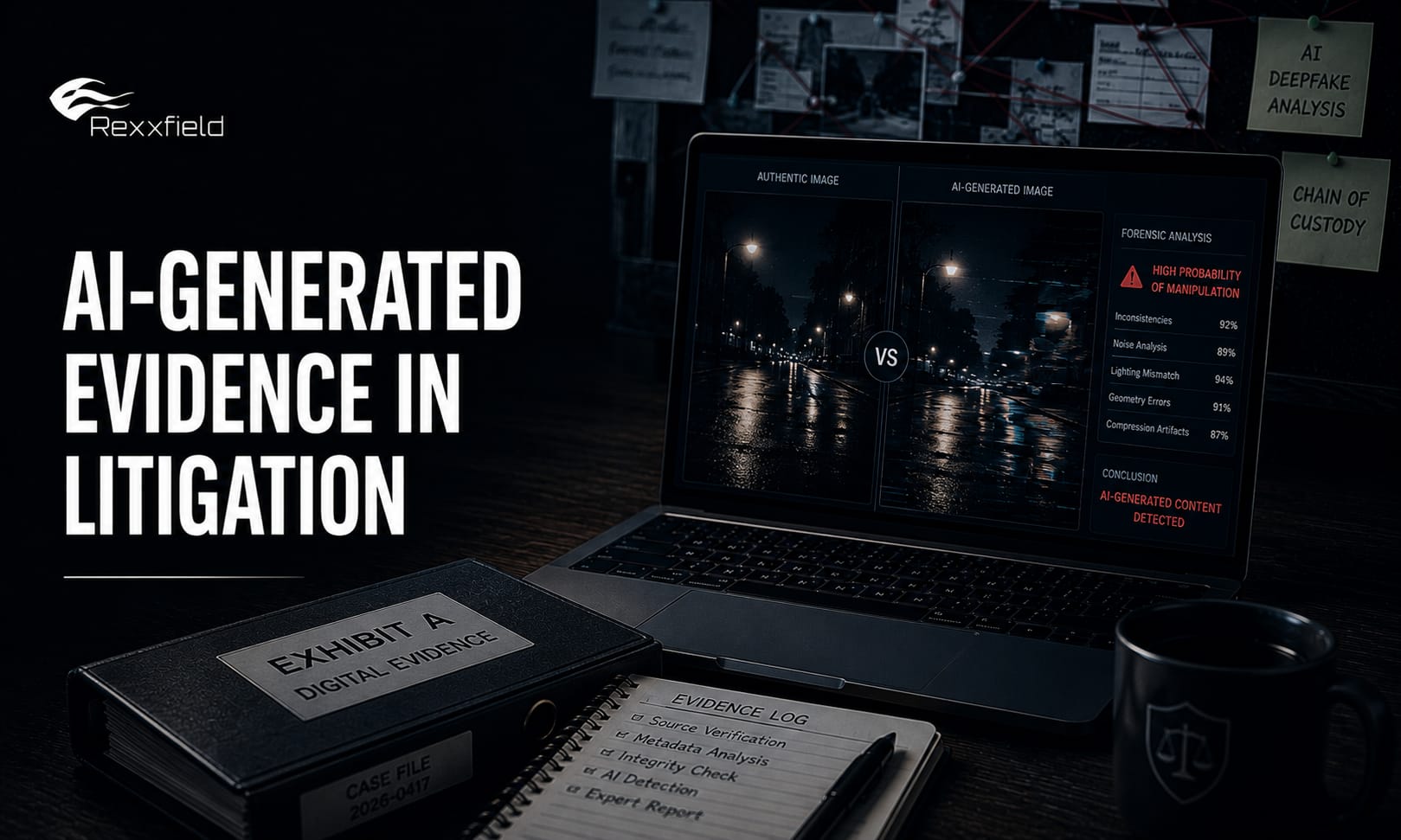
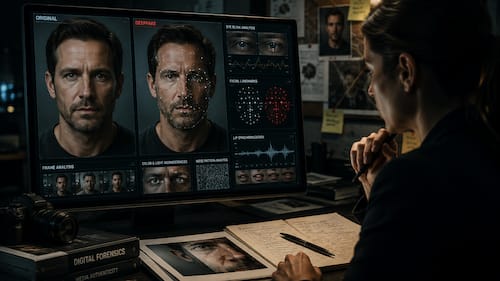
During a deepfake investigation, we compare media with known source material, examine file structure and metadata where available, reconstruct chain of custody and seek independent corroboration. For voice evidence, call records, account access and known samples may be relevant.
Identity abuse extends beyond the recording
A cloned voice is often one part of a broader impersonation using a spoofed number, spoofed emails, false email domain or fake social profile. Investigating only the audio can miss the more traceable parts of the event.
We map the delivery path and identify where the operator interacted with real systems. Our email impersonation and fake business page work shows why surrounding infrastructure matters.
Before litigation
Preserve original media, document how it was received and restrict unnecessary copying. Before relying on it in a demand or pleading, understand what can and cannot be established.
Sometimes the strongest conclusion is not that a file came from a particular model, but that it lacks reliable provenance and conflicts with independent records.
How Digital Forensics Authenticates Suspected Deepfakes
During any deepfake investigation, automated detectors are a useful first pass, but they are trained on yesterday’s generation models and lose reliability against new ones within months. A forensic examination goes further: comparing suspect media against known authentic samples of the same person’s voice or face, examining compression history and file structure for signs of re-encoding or splicing, and checking whether metadata is consistent with the claimed source device and date. For voice specifically, biometric comparison against verified recordings can identify inconsistencies that a listener would never notice.
Chain of Custody for Synthetic Media Evidence
The earliest available copy of a recording is almost always the most valuable one. Every re-upload, screen recording, or platform re-compression strips information that could otherwise help establish authenticity, so preserving the original file, the device or account it came from, and the metadata attached to it should happen before anyone tries to analyze the content itself. Where litigation is likely, working with counsel early to secure a preservation order can prevent a receiving platform or device owner from routinely deleting the very data an expert would need.
Live and Real-Time Deepfakes Are a Growing Category
Recorded audio and video are no longer the only concern. Real-time face-swap and voice-conversion tools now operate during live video calls, which has already been used to impersonate executives in real-time interviews for fraudulent purposes. These interactions leave a different kind of evidence trail than a recorded file — call logs, meeting platform metadata, IP addresses and account activity often matter more than the video itself, since the synthetic layer may never be saved anywhere. Organizations that rely on video calls for identity verification should treat that assumption as outdated and build in an independent, out-of-band confirmation step for any high-value request.
How Rexxfield Approaches Deepfake Investigation
Our digital forensics and litigation support work regularly overlaps with cases involving cloned voices used to target executives, an area we also cover through digital executive threat intelligence investigations. Voice cloning is increasingly the opening move in a business email compromise scheme rather than a standalone attack — a pattern we break down in AI-Powered BEC: How AI Makes Email Fraud More Dangerous.
Frequently asked questions
Can a cloned voice sound real?
Yes. Modern tools can be highly convincing, so independent verification is essential.
Is a detector enough to prove a deepfake?
No. Detector results should be considered with provenance, metadata and corroborating records.
What should counsel preserve?
The earliest file, receiving account or device, related messages, call records and chain-of-custody information.
Can the operator be identified?
Potentially. Delivery accounts, infrastructure and surrounding behavior may be more revealing than the media.
What should be sent to a forensic examiner first?
The original file in its native format, the device or account that received it, and any available metadata or transmission records — not a screen recording or a copy that has already been compressed or re-encoded by a messaging app.
Can a live video call be faked convincingly?
Yes, using real-time face-swap and voice-conversion tools, which is why organizations should verify high-value requests through a second, independent channel rather than relying on recognizing a face or voice on a call alone.
Sources and further reading
- FTC Voice Cloning Challenge
- FBI impersonation alert
- Rexxfield Email Impersonation
- Rexxfield Litigation Support
Left unresolved, deepfake investigation gaps can undermine an otherwise strong case, which is why early authentication matters.
Request consultation from AI sSpecialist
Deepfake investigation work will keep evolving alongside the tools that create synthetic media, but the evidentiary questions we ask on day one rarely change: what is the earliest copy, who had access to the systems involved, and what independent record corroborates or contradicts the recording.