A narcissist smear campaign is not just gossip. It is a calculated effort to damage your credibility, isolate you socially, and distort how others perceive you. Our founder personally endured a narcissist smear campaign that devastated his business. Staff lost their jobs. Vendors went unpaid. False narratives spread quickly and quietly, reshaping relationships and trust almost overnight. Instead of collapsing under the damage, he leaned into his background in information security and digital forensics. He treated the smear campaign as an investigation. That experience ultimately led to the creation of Rexxfield.
What Is a Narcissist Smear Campaign
A narcissist smear campaign is a coordinated attempt to destroy someone’s reputation through false allegations, misleading narratives, and defamatory communications.
It may involve:
-
False accusations shared privately with employers or clients
-
Anonymous emails or text messages
-
Fake social media accounts
-
Coordinated negative reviews
-
Selectively edited screenshots
-
Rewriting history to cast the aggressor as the victim
Often the individual behind the narcissist smear campaign hides behind anonymity or uses intermediaries. That concealment makes identifying the bad actor challenging without technical expertise.
The goal is simple, control the narrative and punish the target.
Identify The Bad Actor Behind a Narcissist Smear Campaign
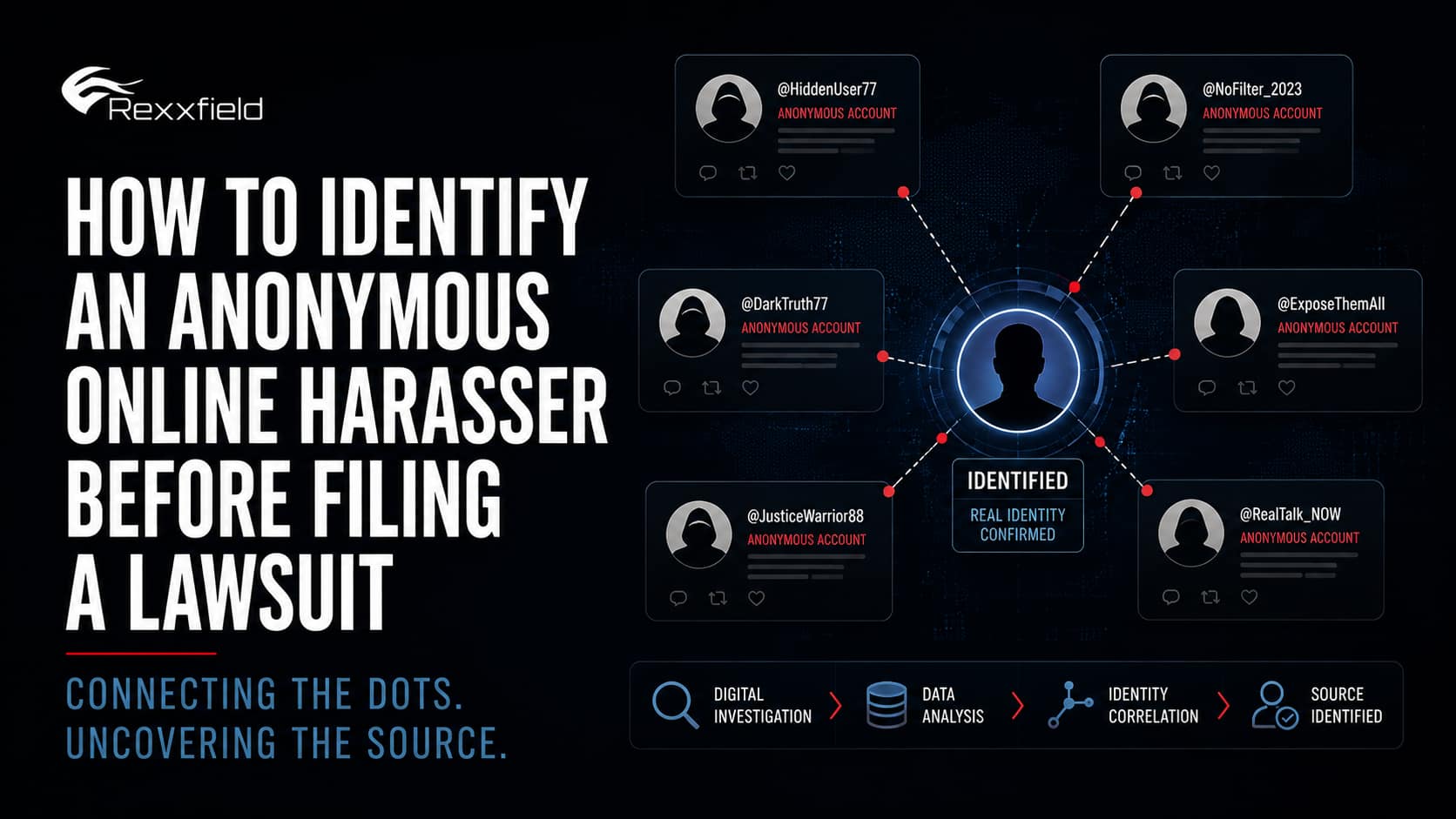
 Uncovering the person behind a narcissist smear campaign requires more than guesswork.
Our cyber investigators specialize in identifying individuals responsible for defamatory messages sent by:
-
Anonymous websites
-
Review forums (Reddit, etc.)
-
Messaging apps
We conduct structured digital investigations, trace digital footprints, analyze metadata, and follow technical indicators that reveal connections the average person cannot see.
The difference between suspicion and proof is evidence.
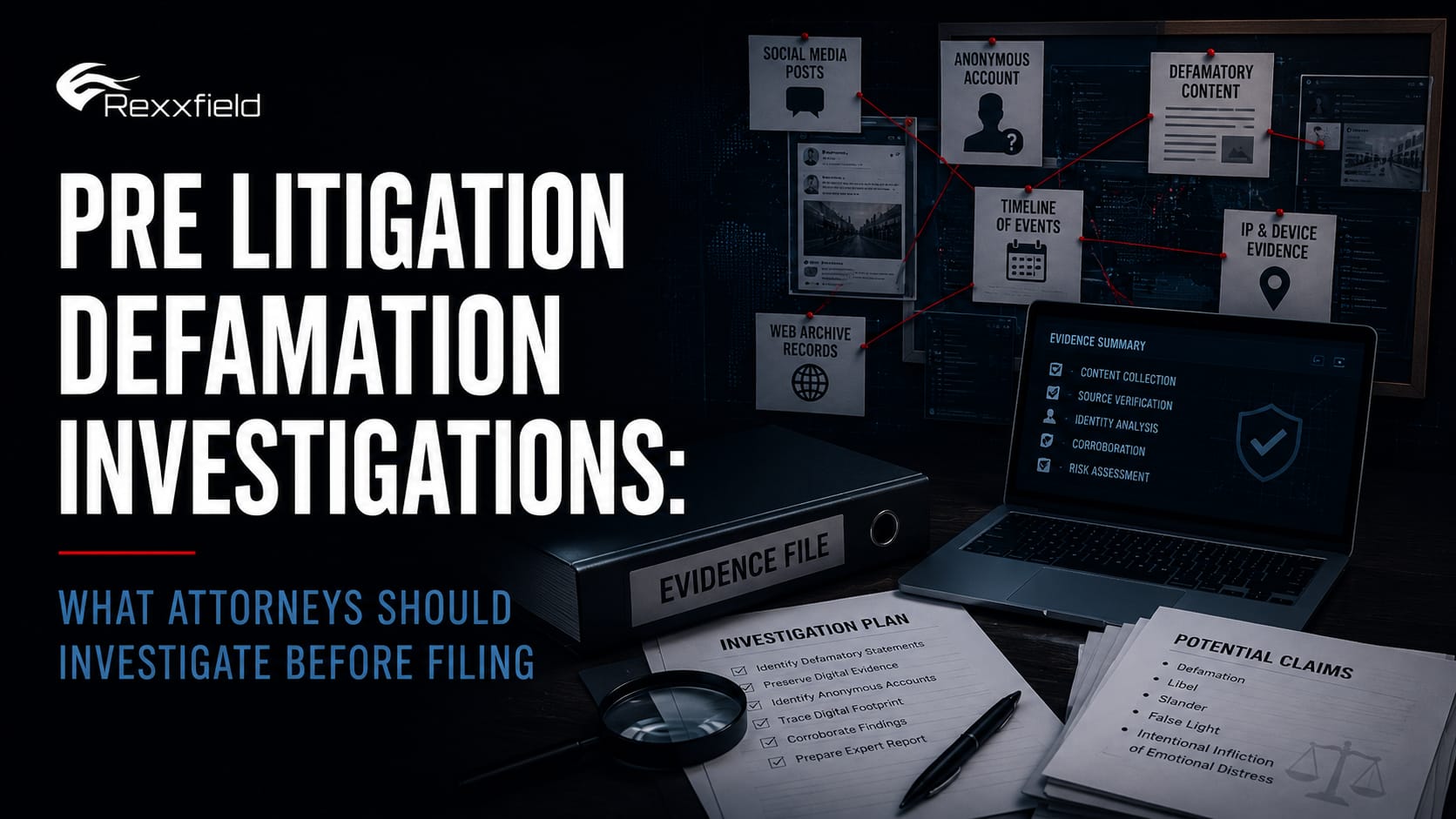
Consider seeking assistance from cyber investigators before approaching a lawyer when dealing with an unidentified bad actor. Engaging lawyers right away may alert the wrongdoers to your intentions, as subpoenas in a civil case must be delivered to the anonymous individual before any response can be obtained. However, by turning to Rexxfield, you can unveil the bad actor without their awareness of the investigation. Rexxfield operates within legal boundaries, providing visible and impactful outcomes, while maintaining the element of surprise and preserving the integrity of the process.
Help me find out who is responsible
 The following strategies can help in the identification process:
- Conduct Digital Forensics:
Gathering digital evidence is crucial in identifying the source of the smear campaign. Scrutinize the content, such as defamatory posts, negative reviews, or false allegations, for any patterns, language clues, or inconsistencies that may provide hints about the person or group behind it. Analyze metadata, timestamps, and IP addresses associated with the content to identify potential connections or anomalies.
- Examine Social Media Accounts and Online Profiles:
Investigate the social media accounts and online profiles involved in spreading the defamatory content. Look for suspicious behavior, such as recently created accounts with limited activity, a history of aggressive or trolling behavior, or a pattern of targeting specific individuals or organizations. Cross-reference the usernames, profile pictures, and shared content to identify any links or similarities that could lead to the bad actor.
- Monitor Online Communities and Discussions:
Active monitoring of online communities, forums, or discussion platforms where the smear campaign is unfolding can provide valuable insights. Look for individuals who consistently engage in negative discussions, promote false information, or encourage others to participate in the smear campaign. Observe their behavior, language patterns, and network connections to uncover potential affiliations or motives.
- Seek Assistance from Professionals:
In complex cases, it may be necessary to enlist the help of professionals, such as reputation management experts, digital investigators, or cybersecurity specialists. These professionals possess the necessary expertise and tools to conduct thorough investigations, trace digital footprints, and identify the bad actor behind the smear campaign.
How we identified individual behind a smear campaign
Why You May Want to Investigate Before Hiring a Lawyer
Many people immediately contact an attorney when facing a narcissist smear campaign. That instinct is understandable, but it may not always be strategic.
In civil litigation, subpoenas typically must be served on the anonymous individual before a response can be obtained. This can alert the bad actor to your intentions and give them time to escalate, delete evidence, or prepare counter narratives.
By conducting a discreet investigation first, you may identify the bad actor without signaling that they are under scrutiny.
Rexxfield operates within legal boundaries, preserving evidence and maintaining the element of surprise. Once the facts are clear, legal strategy becomes stronger and more targeted.
Legal Measures and Law Enforcement
When a narcissist smear campaign is carried out anonymously, many people assume the only option is to immediately sue and serve the anonymous individual.
That is not always how the process works.
In many cases, unmasking efforts begin with subpoenas directed to third party platforms or service providers, such as social media companies, email providers, hosting services, or telecommunications companies. These subpoenas may seek account registration data, IP logs, metadata, or other identifying information.
Whether the anonymous speaker is notified at the outset depends on several factors, including:
-
The platform’s internal policies
-
The jurisdiction where the case is filed
-
Applicable court standards
-
Whether a motion to quash is filed
Courts often apply specific legal tests before allowing an anonymous individual to be unmasked.
Two commonly cited standards include:
The Dendrite test, which requires the plaintiff to make a prima facie showing of defamation and balance First Amendment rights against the strength of the claim.
The Cahill test, which generally requires the plaintiff to produce sufficient evidence to survive a motion for summary judgment before disclosure.
Some jurisdictions require notice to the anonymous poster and an opportunity to object. Others may allow limited early discovery under certain conditions.
The key point is this:
Unmasking an anonymous participant in a narcissist smear campaign is possible in appropriate cases, but it must be done carefully, strategically, and in compliance with jurisdiction specific standards.
A premature or poorly structured legal filing can fail. A properly prepared approach supported by evidence is far more effective.
 Libel and Free Speech
Libel, Slander, and the First Amendment
Libel refers to written false statements presented as fact that harm a person’s reputation. Slander refers to spoken defamatory statements.
It is often said that “defamation is not protected speech.” That statement is broadly true, but it requires important constitutional nuance.
The First Amendment strongly protects speech, including harsh criticism and unpopular opinions. However, false statements of fact that cause reputational harm may fall outside constitutional protection. Courts impose strict limits before speech can be labeled defamatory. Key principles include:
Truth Is an Absolute Defense
A true statement, even if damaging, is not defamation.
Source: U.S. Supreme Court, Philadelphia Newspapers, Inc. v. Hepps, 475 U.S. 767 (1986)
Opinion Is Generally Protected
Statements that cannot reasonably be interpreted as stating actual facts are protected.
Source: U.S. Supreme Court, Milkovich v. Lorain Journal Co., 497 U.S. 1 (1990)
Public Figures Must Prove Actual Malice
Public officials and many public figures must show the speaker knew the statement was false or acted with reckless disregard for the truth.
Source: U.S. Supreme Court, New York Times Co. v. Sullivan, 376 U.S. 254 (1964)
Constitutional Limits on Defamation Law
False statements of fact do not receive the same First Amendment protection as truthful speech.
Source: U.S. Supreme Court, Gertz v. Robert Welch, Inc., 418 U.S. 323 (1974)
How to deal with a narcissist
Navigating smear campaigns by narcissists, or worse, sociopaths, requires a strategic approach. It is crucial not to engage in retaliation or fight fire with fire. Responding in kind only fuels the antagonist’s determination, especially if they have narcissistic or anti-social personality disorders, as was the case with the individual who relentlessly sought to dismantle my once ordinary and uneventful life. By refraining from counterattacks, you deny the narcissist the satisfaction they derive from your distress. These individuals thrive on the outward manifestation of your suffering.
Similar to how a cat loses interest in a motionless mouse, a sociopath grows bored when they fail to elicit painful reactions from their victim. Although it may be tempting to retaliate, the most effective course of action with this type of person is to humble your pride and strategically disengage. Yes, that’s right—withdraw! However, disengaging does not mean giving up, as your reputation will not improve through inaction. Instead, it requires careful and discreet remedial actions taken “under the radar.” By doing so, you deny the sociopath their desired reward while actively working to address the damage inflicted upon your reputation.
It is essential to adopt a proactive stance and implement the following strategies:
- Seek Support: Surround yourself with a supportive network of friends, family, or professionals who can provide emotional support and guidance throughout the ordeal. Their understanding and perspective will bolster your resilience.
- Document and Preserve Evidence: Collect and preserve any evidence related to the smear campaign, including emails, messages, or other forms of communication. This documentation may prove useful should legal action be necessary in the future.
- Consult Legal Advice: Engage with an attorney experienced in defamation and privacy laws to understand your rights, options, and the best course of action. They can guide you through the legal aspects and help formulate a comprehensive strategy.
- Strengthen Your Online Presence: Focus on building and maintaining a strong, positive online presence. Create and curate content that showcases your expertise, accomplishments, and values. This helps counterbalance any false information circulating about you.
- Engage Trusted Contacts: Reach out to individuals within your personal and professional circles who understand the situation and are willing to vouch for your character. Their testimonials and support can reinforce your credibility.
- Monitor and Respond Strategically: Stay vigilant in monitoring online platforms and social media where the smear campaign is unfolding. Respond strategically, addressing false claims or allegations with measured and factual responses, if appropriate. However, avoid engaging directly with the perpetrator or getting entangled in their manipulative tactics.
- Seek Professional Reputation Management Assistance: Consider working with reputation management professionals who specialize in handling online defamation cases. They possess the expertise and resources to monitor, mitigate, and repair damage to your reputation effectively.
Remember, while disengaging from the narcissist’s games is crucial, it is equally important to take proactive steps to protect and rebuild your reputation. By denying the sociopath their reward and diligently working to address the situation, you can regain control and diminish the impact of their smear campaign.
The Impact of a Narcissist Smear Campaign
Impeding Professional Advancement:
For professionals and job seekers, online defamation can hinder career growth and advancement. Employers, clients, and colleagues often conduct online research to assess an individual’s reputation and suitability for employment or collaboration. Negative online content, whether true or false, can create doubt and reluctance to engage with someone whose reputation is tarnished. This can result in missed opportunities and hindered professional development.
Economic and Financial Consequences:
A smear campaign can have significant economic and financial implications. For businesses, negative reviews, false allegations, or malicious campaigns can damage sales, deter potential customers, and harm the bottom line. The impact can be particularly severe for small businesses or startups that heavily rely on their online reputation to establish credibility and attract clients. Additionally, the costs associated with reputation repair, legal action, or hiring professional assistance can place a considerable financial burden on individuals and organizations.
Emotional and Psychological Distress:
Being subjected to smear campaigns by narcissists can have a profound emotional and psychological impact on individuals. False accusations, character assassination, or targeted harassment can cause distress, anxiety, and depression. The constant fear of reputational damage, coupled with the relentless nature of online content, can lead to a decline in mental well-being and overall quality of life.
Social Stigma and Isolation:
A smear campaign can subject individuals to social stigma and isolation. When false information or negative narratives circulate widely, friends, family, and acquaintances may distance themselves, believing the defamatory content to be true. This isolation can further exacerbate the emotional toll and hinder the process of reputation recovery.
Legal and Reputational Risks:
Online defamation poses legal risks for both victims and perpetrators. Defamation laws vary across jurisdictions, but victims may pursue legal action to seek redress, secure retractions or apologies, and claim damages for harm caused to their reputation. However, engaging in legal battles can be time-consuming and expensive and may draw even more attention to the damaging content, exacerbating the reputational impact.
Conclusion
A malicious online smear campaign can cause substantial damage to an individual’s or organization’s reputation. By understanding the nature of such campaigns and employing the strategies outlined in this article, one can enhance their ability to identify the bad actor behind the malicious campaign. It is essential to remain vigilant, gather evidence, seek professional assistance when needed, and explore legal avenues to protect one’s reputation and hold the perpetrators accountable for their actions. Remember, uncovering the truth and regaining control over your online reputation is a step toward reclaiming your credibility and maintaining a positive digital presence.
I need Help to End a Narcissist Smear Campaign
If you are facing a narcissist smear campaign and need help identifying the bad actor or protecting your reputation, contact Rexxfield for a confidential consultation.
The sooner you act strategically, the stronger your position becomes.