Discovering that someone created a fake social media page pretending to be your business is unsettling. Customers start asking questions, someone may be messaging your clients, and your brand reputation suddenly feels out of your control.
The first question most business owners ask is simple:
Can the person behind a fake business page actually be identified?
In many cases, the answer is yes.
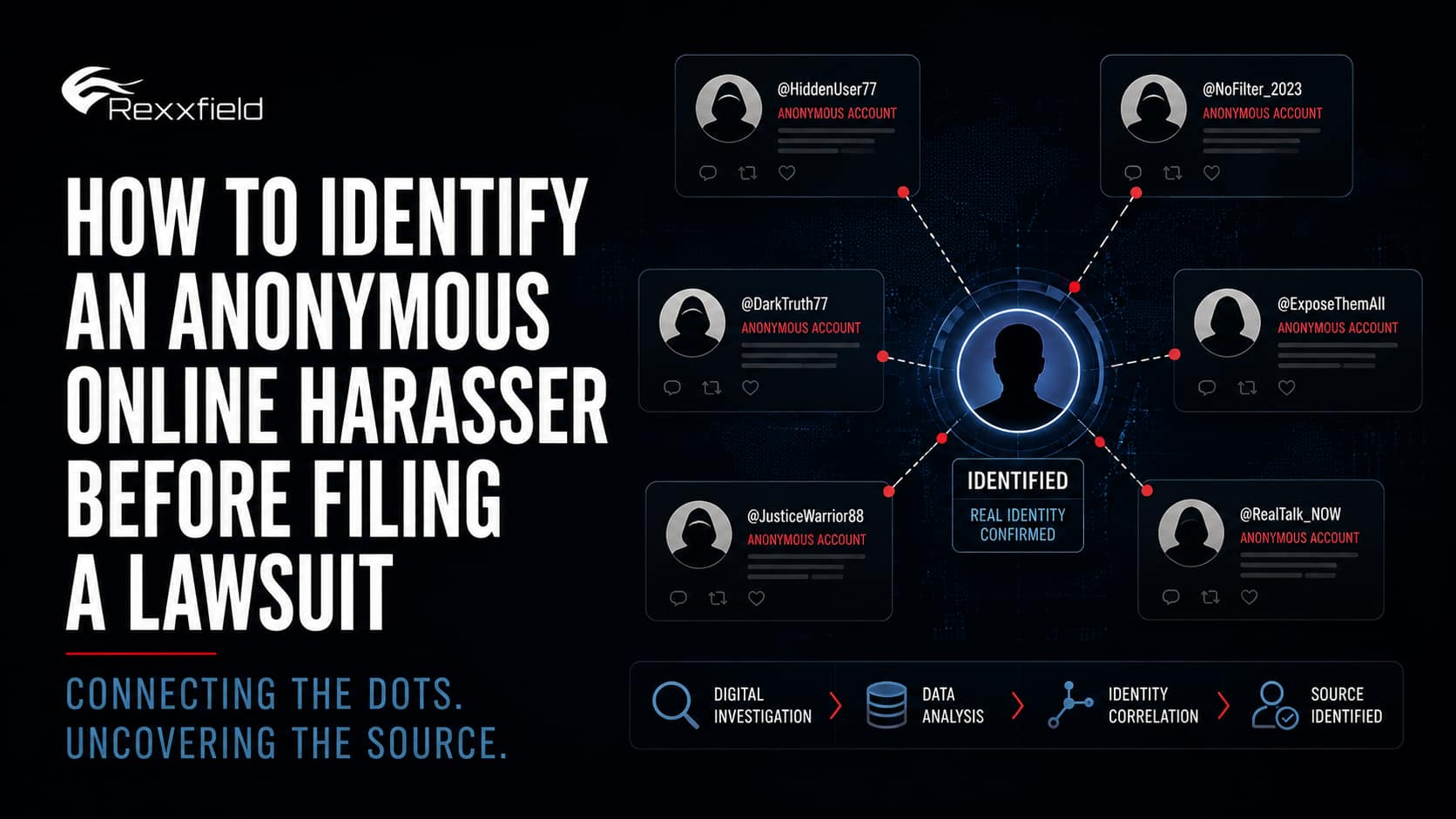
Even when someone hides behind fake profiles, VPN services, anonymous email accounts, or burner phone numbers, their activity often leaves behind digital clues. Those clues can be analyzed through social media investigations, open source intelligence research, and behavioral analysis.
Before jumping into lawsuits or reporting the account everywhere, many business owners first want clarity:
-
Who created the fake page
-
Whether it is a competitor, disgruntled individual, or scam operation
-
Whether their suspicions about a specific person are correct
-
What the best next step is to stop the impersonation
That is where social media investigations come in.
What Is Fake Business Page Impersonation?
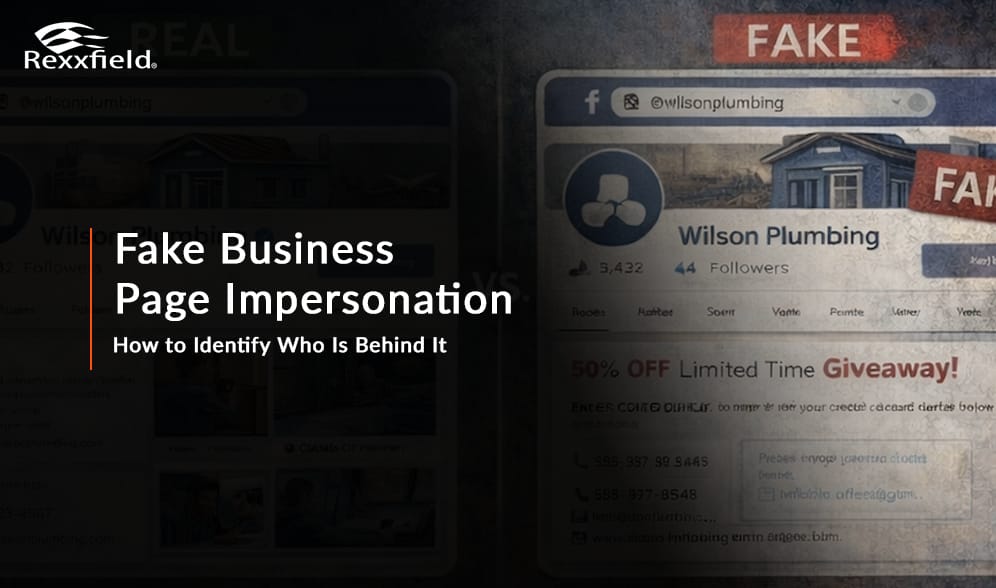
 Fake business page impersonation occurs when someone creates a social media account pretending to represent a legitimate company.
The impersonator may copy: Your company name, logo and branding, product photos, website links, staff identities, and/or your existing social media posts.
To a customer, the account looks legitimate.
In reality, it may be used to scam customers, spread false information, damage your reputation, harass business owners, and redirect customers to fraudulent websites.
According to the U.S. Federal Trade Commission, impersonation scams are one of the fastest growing fraud categories online.
How Fake Business Pages Are Investigated
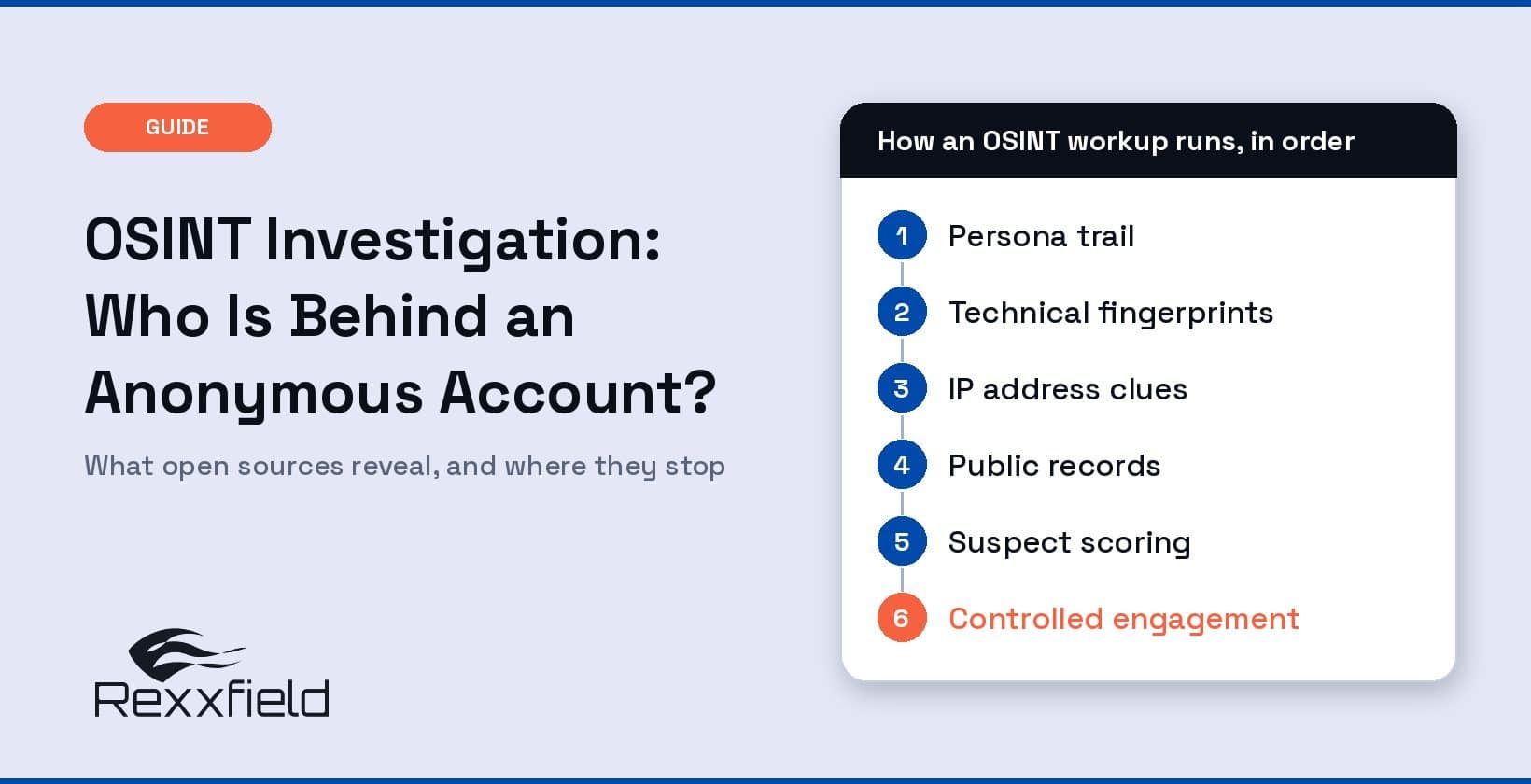
When a business owner wants to know who is behind a fake page, investigators look beyond the visible account.
Most impersonators try to hide their identity, but they often make small operational mistakes.
Investigations typically involve:
1. Open Source Intelligence Analysis
Open source intelligence, often called OSINT, examines publicly available data connected to the account.
This may include:
-
Username reuse across platforms
-
Linked email accounts
-
Historical domain registrations
-
Associated phone numbers
-
Image metadata
-
Social network connections
Patterns across platforms can reveal connections to a real individual.
2. Behavioral Pattern Analysis
Even anonymous accounts reveal behavioral fingerprints.
Investigators analyze:
-
Posting schedules
-
Writing style
-
Language patterns
-
Interaction behavior
-
Target selection
These patterns can link multiple accounts to the same actor.
3. Social Engineering Investigations
In some cases, investigators interact with the impersonator strategically to gather identifying clues.
This may reveal:
-
Contact information
-
Technical indicators
-
Communication infrastructure
-
Links to other accounts
4. Digital Infrastructure Mapping
Investigators may analyze:
-
Hosting infrastructure
-
Associated websites
-
Email services used by the impersonator
-
Cross platform technical indicators
Even when someone uses privacy tools such as VPN services, additional infrastructure may reveal connections.
How Rexxfield Helps Identify Fake Social Media Accounts
 Rexxfield specializes in cyber investigations involving anonymous online activity, including fake business page impersonation.
Our social media investigations focus on identifying the actor behind the account through:
-
Open source intelligence data gathering
-
Social media behavioral analysis
-
Digital infrastructure correlation
-
Social engineering investigations
-
Proprietary investigative software tools
In many cases, we can help businesses determine:
-
Who created the impersonation account
-
Whether multiple accounts are connected
-
Whether a known suspect is involved
-
How the impersonator is targeting customers
If You Already Have a Suspect
Many clients come to us with a suspicion.
They may believe the impersonation is connected to a competitor, former employee, disgruntled customer, or someone involved in a business dispute.
This is extremely valuable.
Investigations can often rule in or rule out a suspect based on available digital evidence.
If the suspect is not involved, it prevents false accusations.
If they are involved, it provides evidence that supports the next steps.
What Happens After the Impersonator Is Identified?
Once the person responsible is identified, businesses have several options.
# Request Platform Removal
Social platforms allow businesses to report impersonation accounts for removal.
Evidence identifying the impersonator can strengthen those requests.
# Confront the Bad Actor With Evidence
In many cases, when impersonators realize they have been identified, they remove the content voluntarily.
Evidence often changes the dynamic immediately.
# Report the Activity to Law Enforcement
If the impersonation involves fraud, harassment, or scams targeting customers, law enforcement may investigate.
For U.S. cases, reports can be submitted to the FBI Internet Crime Complaint Center.
# Pursue Legal Action
Businesses harmed by impersonation may pursue civil action for damages.
Legal claims may involve trademark infringement, defamation, fraud, impersonation related violations.
Information about online impersonation laws can be found through the Electronic Frontier Foundation.
What To Do If Your Business Is Being Impersonated
If you discover a fake page, act quickly.
- Document the Evidence – Take screenshots of the page, messages, posts, and followers.
- Warn Your Customers – Post a notice on your official channels.
- Report the Account – But WAIT with reporting if you want to hire cyber investigators to investigate the account
- Consider an Investigation – If the impersonation is harming your business or scamming customers, identifying the person responsible can stop the activity.
You may also want to review our related investigation work.
FAQ: Fake Business Page Impersonation
 – How do I report a fake Facebook business page?
Facebook allows businesses to report impersonation through its help center.
– Can fake Instagram accounts be traced?
Sometimes. Identification depends on digital evidence, account behavior, and cross platform connections.
– Why would someone impersonate my business?
Common motives include fraud, harassment, reputation attacks, or phishing campaigns.
– Can investigators really identify anonymous social media accounts?
In many cases yes. Even anonymous accounts often leave digital footprints that connect to real individuals.
Where Fake Business Accounts Appear
Business impersonation occurs across nearly every social platform.
Facebook Fake Business Pages
Facebook impersonation is extremely common. Scammers copy business pages and message customers claiming promotions, giveaways, or payment requests. Here is where you can report a impersonation profile.
Instagram Business Impersonation
Fake Instagram pages often copy real brand accounts completely, sometimes duplicating every post and profile detail.
Common tactics include fake giveaways, crypto scams, direct messaging phishing, or fake product sales.
LinkedIn Company Impersonation
Fake LinkedIn company pages or recruiter profiles may impersonate real businesses to run employment scams.
The FBI has warned that employment related scams tied to impersonated companies continue to increase.
Google Business Listing Impersonation
Attackers sometimes create fake Google Business listings to redirect customers to fraudulent phone numbers or payment portals.
TikTok and X (Twitter) Business Impersonation
Short form video platforms are also used to impersonate brands and redirect customers to external scams.
How we can help you
Most business owners facing this problem want to know one thing:
Who is behind it.
That is exactly what social media investigations are designed to answer.
If your company is dealing with fake business page impersonation, Rexxfield investigators can help analyze the digital footprint behind the account and work toward identifying the individual responsible.
People Also Ask: Fake Business Page Impersonation
– How do I find out who created a fake business page?
Identifying who created a fake business page usually requires analyzing digital evidence connected to the account. Investigators often review username reuse, linked emails, messaging behavior, and other open source intelligence signals across platforms. Even anonymous accounts may leave patterns that connect them to a real individual.
– Can police track a fake Facebook or Instagram account?
Law enforcement may investigate impersonation when fraud or harassment is involved. However, many businesses first pursue private cyber investigations to identify the person responsible before escalating the matter to authorities.